ProductSafety.help
The Safety File - preventive product safety, filed in order

Independent guide

Prevent unsafe products reaching the market, and catch the ones that slip through

The Safety File is an independent desk for preventive product safety, written for manufacturers, importers, distributors and marketplace sellers. It asks one question, file by file: what must be done to make, document and keep this product safe and compliant?

That is deliberately different from product liability, which asks what happens when a defective product causes damage and who may be liable. This site stays on the preventive side: the rule, the operator, the hazard, the assessment, the testing, the documentation, the label, the traceability, the incident, the corrective action, and the evidence.

Walk the topics

01Product safety foundations What safe and compliant means before a product is sold: the preventive job, the actors, and the file that proves the work was done.18 guides - Open file 02Applicable rules and markets Which rule applies in which market, how the EU framework fits together, and how to keep different countries rules apart.14 guides - Open file 03Economic operators and their duties Manufacturer, importer, distributor, fulfilment provider and marketplace: who owes what, and where duties change hands.12 guides - Open file 04Identifying product hazards The hazards that turn up in consumer products, how to spot them, and how to record them before they become incidents.20 guides - Open file 05Product risk assessment A workable risk assessment method: severity, probability, vulnerable users, change, and the decision that follows.16 guides - Open file 06Testing and standards What testing proves, what it does not prove, how to choose a lab and a plan, and how to read a report honestly.11 guides - Open file 07Technical documentation The technical file as the product safety record: what goes in it, how it is kept current, and what an authority asks for first.15 guides - Open file 08Labelling, warnings and instructions Labels, warnings and instructions that users can find, read and act on, in the languages and places the rule requires.19 guides - Open file 09Traceability and identification How a product is identified through its life, from batch code to complaint, so a problem can be found and fixed.13 guides - Open file 10Responsible persons and EU representatives The EU responsible person and the authorised representative: what each role is, how it is appointed, and what it must do.17 guides - Open file 11Marketplaces and distance selling Selling at a distance: marketplace duties, listings that support safety, takedowns, complaints and cross-border sales.12 guides - Open file 12Children's products Products for children, where the user cannot read the warning or judge the risk: age grading, small parts, and extra care.21 guides - Open file 13Electrical and connected products Electrical safety, batteries, chargers and connected products whose software keeps changing after sale.14 guides - Open file 14Toy safety Toys under their own directive alongside the general framework: age warnings, testing, chemicals and recalls.16 guides - Open file 15Household and everyday products The products in kitchens, living rooms and gardens: furniture, heat, chemicals, candles and leisure goods.10 guides - Open file 16Post-market monitoring and complaints After launch: complaints, signals, registers and the judgement about when a signal becomes an action.18 guides - Open file 17Corrective actions and recalls Correcting a problem in the market: deciding, planning, notifying, tracking, and changing what caused it.13 guides - Open file 18Safety Gate and market surveillance authorities Safety Gate, market surveillance checks, authority requests and bans: how enforcement works and how to respond.20 guides - Open file 19Second-hand, repaired and refurbished products Used, repaired and refurbished products: checks before resale, repairs that change duties, and traceability that survives.15 guides - Open file 20Audits, checklists and mistakes The desk's own paperwork: audits, pre-launch checks, supplier reviews, and the mistakes that recur across files.12 guides - Open file

How this desk works

01
Identify
Name the product, the market and the operator. A file that starts with the wrong product or the wrong role will answer the wrong question.
02
Assess
Work through hazard, risk, testing and documentation in order, and write down what was decided and why.
03
Evidence
Keep labels, traceability and test evidence in the file, so the claim can be checked after launch, not just asserted before it.

How a safety file is built

Three rules. First, no invented numbers and no compliance promises: this site publishes no case studies of its own and never says a particular product complies, because a guide cannot inspect a product it has never seen. Where a number appears, it comes from an official source, is attributed, and carries the date it was checked; worked examples use round numbers and are labelled illustrations. Second, the operator split is kept explicit throughout, because a manufacturer duty, an importer duty and a marketplace duty are different duties, and merging them is how files go wrong. Third, corrections are published, not buried: the corrections page records what changed and why. The desk's position throughout: a product is not safe because a guide says so, it is safe because the hazards were found, the risks were assessed, the evidence was kept, and the file can be checked.
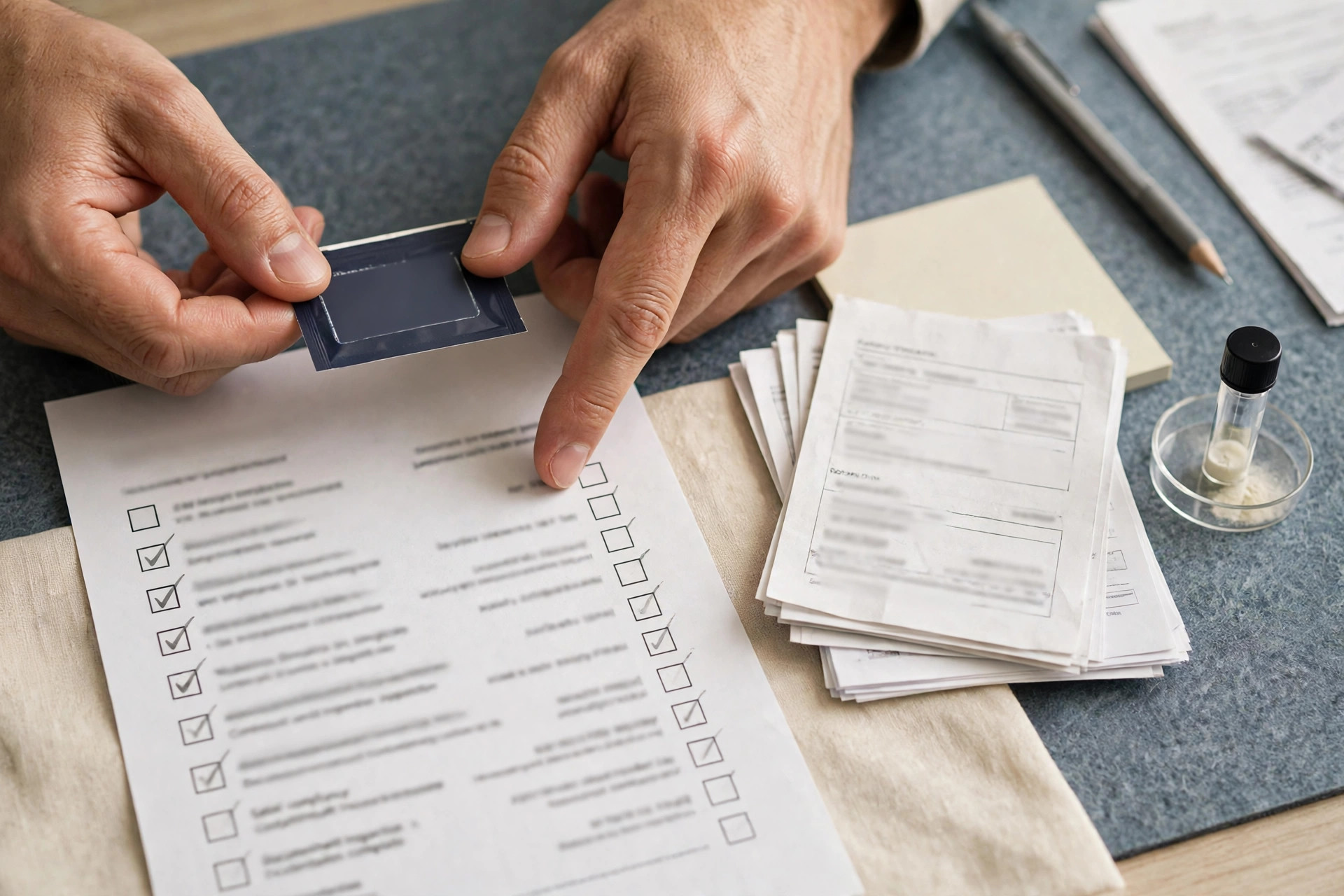
A safety check in progress: a product label being read against a checklist, with test documents beside it